

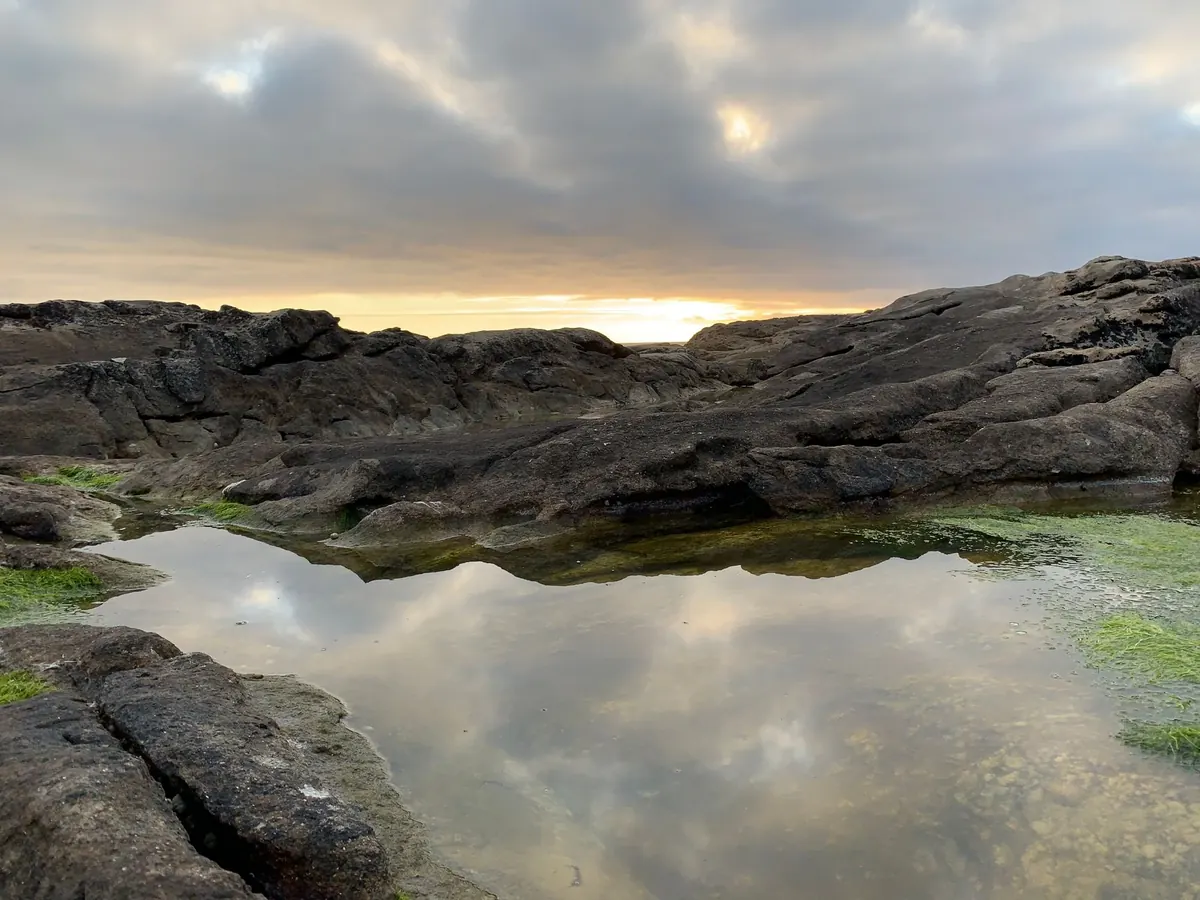


There is a particular smell to a Cornish estuary at low tide in July: warm mud, salt, and the green crunch of marsh samphire underfoot. For a few weeks each summer, the flats around the Camel, the Hayle and the Gannel turn into a free vegetable garden, and the rocks below the cliffs offer a second, quieter harvest of seaweed.
Foraging here is not a treasure hunt. It is a slow walk with a bag, a pair of scissors and a willingness to leave most of what you find exactly where it is. Get the identification right, watch the tide, and you will come home with something that tastes more of this coast than anything you can buy.
Know your two samphires
Two very different plants share the name, and only one of them is worth filling a bag with.
Marsh samphire, also called glasswort, grows on mudflats and salt marsh. It is bright green to olive, jointed and fleshy, with no real leaves — it looks like a tiny string of beads or a soft little cactus. Pinch a stem and it snaps with a wet crunch, tasting clean and salty. It appears from late June and is at its best through July, sometimes into early September. Once it turns reddish and woody it is seeding, and the stems become stringy.
Rock samphire grows on cliffs, shingle and rocky ledges. It is grey-green and leathery, with divided leaves and umbrella-like heads of yellow-green flowers, and it smells strongly of parsley and something medicinal. It is edible but bitter, traditionally pickled, slow-growing and scarce in places. Leave it alone in the main — and never lean over a cliff edge to reach it.
One serious warning: rock samphire belongs to the carrot family, which also contains hemlock and hemlock water dropwort, among the most poisonous plants in Britain. Hemlock water dropwort grows in wet ditches and along streams, often close to where you might be walking. If you are not completely certain of your identification, walk on. The same applies to anything with white umbrella flowers near water.
Which seaweeds are worth taking
You do not need to learn every species on the shore. Five will keep you busy.
- Sea lettuce — bright green, thin, translucent sheets, often floating or draped over rocks. Mild and slightly grassy. Best in spring and summer.
- Dulse — reddish-purple, flat, fan-shaped fronds with a leathery feel. Excellent in summer.
- Kelp or oarweed — long brown straps with a thick base. Adds depth to stocks and broths; available all year, best after spring growth.
- Carrageen — small, dark red-purple and frilly, growing on rocks low on the shore. It sets jellies and puddings.
- Pepper dulse — tiny dark red tufts with a sharp, peppery warmth. A little goes a long way.
Take weed that is attached to rock and looks healthy, or fresh storm-cast weed that is still crisp and wet. Anything slimy, bleached, foul-smelling or heavily covered in barnacles and tiny epiphytes is best left behind.
When to go: seasons and tides
Samphire runs from late June to early September, with the sweetest, most tender stems in July. Sea lettuce is good through spring and summer, dulse peaks in summer, and kelp can be gathered all year but is at its best in spring and early summer.
The tide matters more than the calendar. Go on a falling tide, and aim to be on the ground in the couple of hours either side of low water. Spring tides open up the most shore, but they also move quickly — Cornwall has a big tidal range, and an estuary that looked shallow can be filling fast half an hour later. Check a tide table before you leave the house, and never let the water get behind you.
Places to avoid
- Near harbour mouths, marinas, sewage outfalls, or downstream of farm and industrial runoff.
- For a day or two after heavy rain, when runoff is still washing off the land.
- During or shortly after an algal bloom, when the water looks discoloured or foamy in a strange way.
- On protected sites, nature reserves and sites with special designations — check before you go.
Sustainable harvesting rules
Cornwall's shore is not a larder with no owner. Much of the foreshore is privately held, and picking plants by the root without permission is not acceptable. Hand-gathering a small amount of common plants and seaweed for your own kitchen is generally tolerated, but local rules vary — ask if you are unsure, and follow any signs.
Beyond that, a few habits keep the shore productive year after year.
- Cut, don't pull. Snip samphire above the base with scissors and leave the root and lower stem intact.
- Never uproot seaweed or cut through the holdfast that anchors it to the rock.
- Take a handful from many patches rather than stripping one.
- Leave at least two thirds behind. If you can tell where you have been, you have taken too much.
- Skip the strugglers. Leave single plants on a rock, and anything already grazed by other creatures.
Cleaning your haul
Samphire comes home with more than you think: grass, grit, tiny snails and the occasional strand of something else. Rinse it in seawater first, pick it over properly, then give it a quick rinse in fresh water. Do not soak it for long, or it loses its snap. Use it within a day or two, or blanch and freeze it.
Seaweed needs a bit more patience. Rinse in seawater, then fresh, and soak for about five minutes to loosen sand trapped in the folds. Rinse again, feel through the fronds for small crustaceans hiding in the creases, and trim away tough stipes and any holdfast. Dry it on a rack in the sun, or in a very low oven, then store it in a jar.
Cooking it simply
Marsh samphire needs almost nothing. Steam or blanch it for three or four minutes, drain it, and toss it with butter, a squeeze of lemon and black pepper. Do not add salt — it brings its own. It is also good raw, chopped into a tomato salad, or pickled in vinegar with a little sugar and chilli.
Sea lettuce is best raw in salads or stirred into soup right at the end, so it keeps its colour. Dulse loves a dry frying pan: cook it until it crisps, then crumble it over potatoes or scrambled eggs. Kelp goes into stocks and broths, or slice it thinly and roast it for something to nibble with a drink. Carrageen should be simmered gently in milk with honey, then strained and left to set — a traditional west country pudding.
A sensible note: seaweed holds iodine and other minerals, so enjoy it in moderation, especially if you have a thyroid condition. If you are unsure whether it suits you, ask your GP.
Your first forage: a simple plan
Pick one spot you already know well — a beach or estuary you have walked at low tide before. Check the tide table, aim for a falling tide, and go with a friend if you can.
- Wear boots with grip and take a waterproof bag for your phone.
- Carry scissors, a cloth bag or bucket, and a small knife.
- Take only what you will cook in the next day or two.
- Keep to one or two species you can identify with confidence.
- Clean and cook it the same day, while it still smells of the sea.
Then do it again next year, at the same state of tide, in the same few weeks of summer. That is how shore foraging becomes something you actually know rather than something you read about once — and the samphire will still be there when you come back.
Photo: Dahlia E. Akhaine / Pexels
Related posts
More stories you’ll love reading