



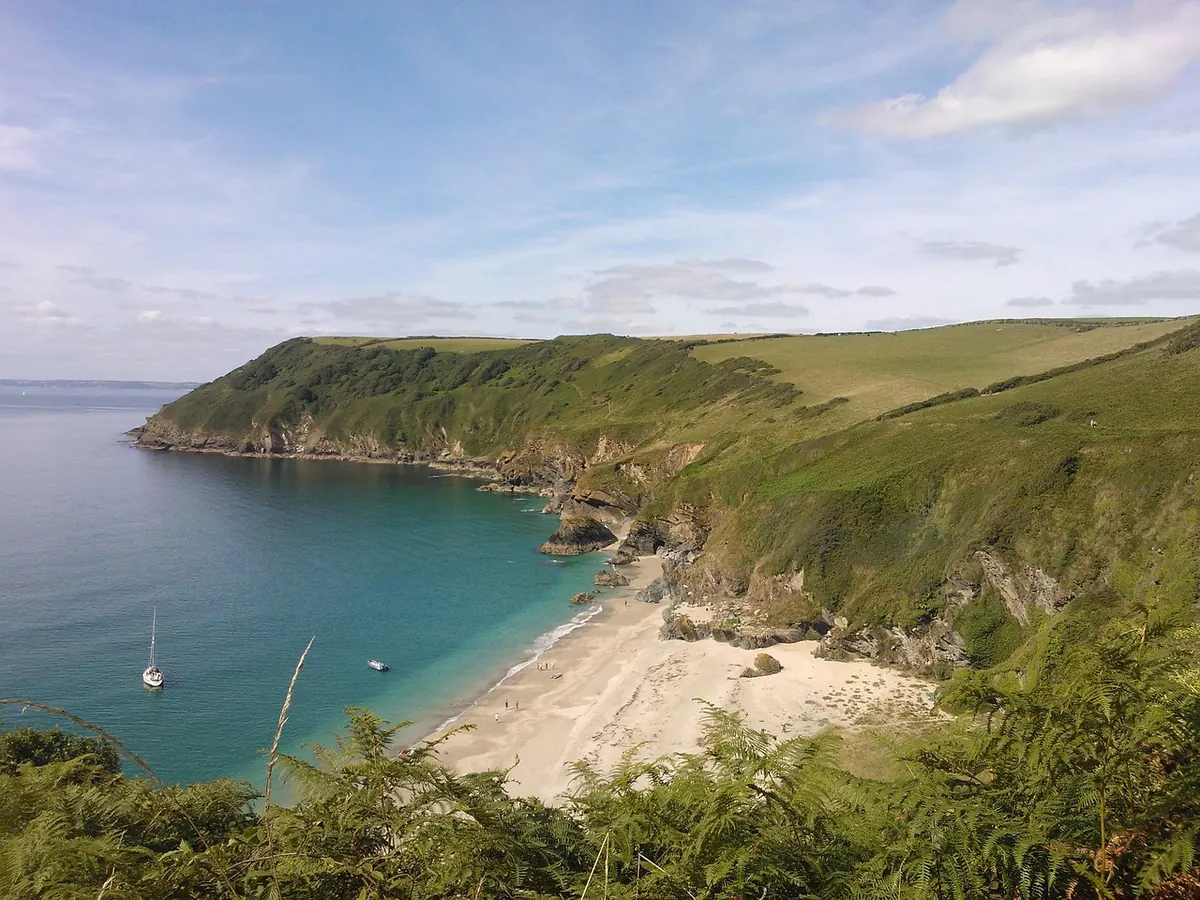
Some of Cornwall's best sand sits at the bottom of a steep path, behind a rock arch, or around a headland you can only round at low water. That is exactly what makes those coves worth the climb, and exactly why the tide matters more here than it does at a resort beach with a car park, a café and a lifeguard hut. Ten minutes with a tide table before you set off changes the shape of the whole day.
Read the Tide Table for the Right Port
Tide times are published for standard ports, and in Cornwall that usually means Newlyn, St Ives, Padstow, Falmouth or Truro. Your cove is very unlikely to sit on one of those. Depending on how far along the coast it is and how the land funnels the water, high water at your beach might arrive ten, twenty or thirty minutes before or after the printed time. Treat the table as a strong guide, not a stopwatch, and build in a margin.
Two things are worth checking beyond the actual times. The first is whether you are in a spring or neap period. Spring tides, which fall roughly twice a month around the new and full moon, push further up the beach and drain further out; neaps are gentler. On the north coast the range between low and high water can be several metres, which is the difference between a wide beach and no beach at all.
The second is the shape of the day's curve. The tide moves fastest around mid-tide and slows as it approaches high and low water, so the last hour of a rising tide is often the one that catches people out on a ledge or a causeway. Low water is not a fixed safe window either: the water turns and starts coming back while you are still out at the far end of the sand.
Where Will You Be Cut Off?
Ask this before you walk down, not after. Hidden coves often have one obvious exit and several routes that look like exits but aren't. Stand at the top of the path, look at the beach as a whole, and work out what disappears first.
- Single-exit coves: if the only way off the sand is the path you came down, check that the base of that path stays dry through the whole tide.
- Headland walks: routes around a point that are passable at low water and submerged long before high water. These are the classic trap on a rising tide.
- Causeways and rock bars: they can go under quickly and the water either side is usually deeper than it looks.
- Caves and zawns: fine to look into, dangerous to shelter in. Swell can fill them in seconds with no warning.
- Rising ground: identify a high ledge or bank you could retreat to and wait out a tide if you had to, and make sure you could actually get onto it.
If you can't answer the question confidently, pick a different cove. There are plenty.
Rip Currents: The Quiet Water Is the Problem
Rip currents are the reason unpatrolled beaches deserve respect. They form where water piled on the beach by waves finds a channel back out, and they can shift position within a single afternoon as the sand moves.
What to look for: a gap in the breaking waves where the sea looks calmer than either side of it, discoloured or sandy water heading offshore, foam or debris being carried out to sea, or a choppy, rippled patch between two sets of surf. On a big day, the calm-looking strip is often the dangerous one.
If you are caught in one, the instinct to swim straight back to the beach is the wrong one. Swim parallel to the shore until you are out of the current, then angle back in. If you can't make progress, float on your back, tilt your head back, spread your arms and legs, control your breathing and raise one hand to signal. Fighting a rip drains you; floating keeps you alive while help comes or the current releases you.
If there's no lifeguard, there's nobody watching but you.
Cold water is its own risk. Enter gradually, keep a close eye on children and anyone who isn't a strong swimmer, and if you have a heart condition or any health concern about cold-water swimming, check with a GP before you go in. Never swim alone, and never swim after drinking.
The Path In Is Part of the Plan
Cornish access paths are frequently steep, loose and slippery. Granite steps polished by a century of boots, wet clay, seaweed on rock, brambles across the last few metres before the sand. Wear something with grip, take your time, and keep both hands free on the way down.
Don't take shortcuts down cliffs or dunes, and don't jump from height into water of unknown depth. Rocks below the surface are not visible from the top of a cliff, and the sea bed changes over winter. If you are carrying kit, a rucksack beats a cool bag with a handle every time.
Think about the walk back, too. Mobile signal vanishes in some of the deeper valleys and on the cliffs between coves, so save the map before you leave the car, note the nearest village, and tell someone where you are going and when you expect to be back. Parking in a passing place or blocking a farm gate is not just antisocial; it can stop a tractor, a lifeboat crew or an ambulance.
Lifeguard Cover, Flags and Who to Call
RNLI lifeguards patrol a set list of beaches rather than every cove. Cover generally runs from around Easter or May through to the end of September, with daily hours that shift through the season and peak-season patrols roughly across the middle of the day. Many of the coves in this guide are not on the list, or are patrolled only at the busiest weeks. Check before you go, and don't assume.
Where lifeguards are on duty, read the flags before you get wet. Red and yellow flags mark the patrolled swimming area between them. A single red flag means do not enter the water. Black and white flags mark a zone for surfboards and kayaks, not swimmers. If you're unsure, ask a lifeguard, then swim between the flags.
In an emergency, call 999 or 112 and ask for the coastguard. If you have a marine VHF radio, Channel 16 is the distress and calling channel. On the beach, what3words is used by emergency services to pinpoint a location, so if you can open it, do. Do not go into the water to rescue someone; throw them something that floats, keep your eyes on them, and call for help.
The Five-Minute Check Before You Step Onto the Sand
Run through this at the top of the path. It takes less time than putting on sun cream.
- Today's high water time, and how long you have before the beach starts shrinking.
- Your route off the beach, including the one to use if the tide beats you.
- Whether the beach is lifeguarded today, and where the flags are.
- Where the nearest phone signal is, and who knows your plan.
- Who is watching the children, and who is watching the sea.
Then relax and enjoy it. Cornwall's hidden coves reward the effort, and a little planning means you spend the afternoon in the water rather than watching it come towards you.
Photo: SirBlackhand / Pixabay
Related posts
More stories you’ll love reading